


Introduction
If you travel for work, you may have heard the term “per diem.” It sounds simple, but many people still get confused about one big question: is per diem taxable?In easy words, per diem is money your employer gives you to cover daily expenses like food, travel, and hotel stays when you are working away from home. The tricky part is that sometimes this money is taxed, and sometimes it is not.Understanding this clearly can save you from paying extra tax or making mistakes in your records. In this guide, you will learn everything in a very simple way—when per diem is tax-free, when it becomes taxable, and how to handle it properly.
What Is Per Diem?
Per diem means “per day.” It is a daily allowance given to employees for business travel expenses.
Instead of asking you to submit every small receipt, your employer may give you a fixed daily amount to cover:
- Meals
- Hotel stays
- Transportation
- Small travel costs
This makes things easier for both the employee and the employer.
Is Per Diem Taxable?
The short answer is: it depends.
Per diem is not taxable if certain rules are followed. But if those rules are broken, it becomes taxable income just like your salary.
Let’s break it down so it’s easy to understand.
When Per Diem Is NOT Taxable
Per diem is usually tax-free if your employer follows what is called an accountable plan.
1. It Must Be for Work Travel
You must be traveling away from your regular workplace for business purposes.
This means:
- You are not working in your usual office
- You are staying overnight or traveling far
If this condition is met, per diem can stay tax-free.
The Amount Must Be Reasonable
The daily amount should not be too high.
Governments set standard limits for daily expenses. If your employer stays within these limits, the payment is generally not taxed.
You Must Use It for Real Expenses
The money should be used for actual travel-related costs like food and lodging.
If you spend it on personal things that are not related to work, it may create issues.
No Extra Money Kept Without Reporting
If you receive more per diem than you actually spend, you may need to return the extra amount or report it.
If you keep extra money without reporting it, that portion can become taxable.
When Per Diem Becomes Taxable
Now let’s look at situations where per diem becomes taxable income.
1. No Proof of Business Travel
If you cannot show that the travel was for work, the per diem will be treated as income and taxed.
2. Payments Above the Allowed Limit
If your employer gives you more than the standard daily rate, the extra amount is usually taxable.
3. No Expense Reporting
If you do not report your travel details or expenses, the entire per diem amount may become taxable.
4. Payments Without a Proper System
If your employer gives per diem without following proper rules (like tracking travel), then it is treated like salary and taxed.
Accountable vs Non-Accountable Plans
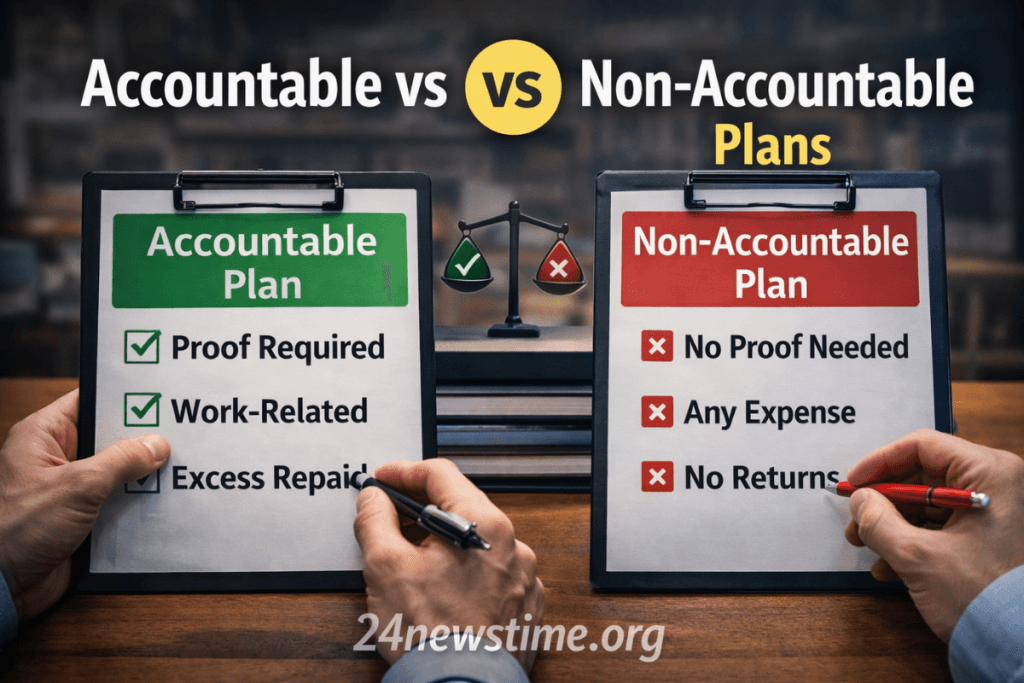
This is very important to understand.
Accountable Plan
Under this system:
- You must show proof of travel
- Expenses must be work-related
- Extra money must be returned
Result: Per diem is not taxed.
Non-Accountable Plan
Under this system:
- No proof required
- No expense tracking
- No need to return extra money
Result: Entire per diem is taxed like regular income.
Per Diem Rates Explained
Per diem rates are usually set based on location and cost of living.
For example:
- Big cities → higher rates
- Small towns → lower rates
These rates cover:
- Meals
- Lodging
- Small daily expenses
Employers often follow standard rates to avoid tax problems.
How Employees Should Handle Per Diem
To stay safe and avoid tax trouble, follow these simple tips:
Keep Basic Records
Even if you are not required to keep every receipt, it is smart to track:
- Travel dates
- Purpose of trip
- Location
Don’t Mix Personal and Work Expenses
Use per diem only for work-related costs.
Return Extra Money If Needed
If your employer asks for unused money back, return it to stay within rules.
Understand Your Company Policy
Each company may have slightly different rules. Always check with your employer.
How Employers Should Manage Per Diem
Employers also need to follow proper steps:
- Set clear travel policies
- Use standard daily rates
- Ask for basic travel details
- Track payments properly
This helps avoid tax issues for both the company and employees.
Common Mistakes to Avoid
Many people make simple mistakes that lead to tax problems.
Here are a few to watch out for:
- Assuming all per diem is tax-free
- Not reporting extra money
- Ignoring travel records
- Receiving high payments without checking limits
Avoiding these mistakes can save you from penalties later.
Benefits of Per Diem
Per diem is not just about tax—it has real benefits.
Simple Process
No need to keep every small receipt.
Saves Time
Both employees and employers save time in paperwork.
Predictable Budget
You know how much you will receive daily.
Less Stress
You don’t need to worry about getting reimbursed later.
Real-Life Example
Let’s make it simple with an example.
Ahmed travels for work for 3 days. His company gives him a fixed daily amount.
- He uses the money for hotel and meals
- The amount is within allowed limits
- He reports his travel
Result: His per diem is not taxed.
Now imagine:
- He gets extra money
- Does not report travel
Result: That amount becomes taxable income.
Conclusion
So, is per diem taxable? The answer is simple once you understand the rules.If the payment is for real work travel, within limits, and properly reported, it is usually not taxed. But if rules are ignored, it quickly becomes taxable income.The key is to stay organized, follow basic guidelines, and understand how your company handles per diem. This way, you can enjoy the benefits without worrying about tax problems.
If you want more simple guides like this, you can visit: https://24newstime.org/
Is per diem always tax-free?
No, it is only tax-free if rules are properly followed.
What makes per diem taxable?
Lack of reporting, high amounts, or no proof of travel.
Do I need receipts for per diem?
Not always, but basic travel records are important.
Can I keep unused per diem money?
Only if your employer allows it and rules are followed.
Is per diem part of salary?
It can become part of salary if rules are not followed.
Informational Table
| Situation | Tax Status | Reason |
| Business travel with proper reporting | Not Taxable | Meets all conditions |
| Payment within daily limits | Not Taxable | Standard rate followed |
| No travel proof provided | Taxable | Cannot verify purpose |
| Extra money not returned | Taxable | Considered income |
| No expense tracking system | Taxable | Treated as salary |